Launch offer — valid today only

A Visual Way to Study the Written Portion of ASA 101, ASA 103 and US Sailing Basic Keelboat With Every Rule Drawn Step by Step!

Points of sail, tacking and jibing, right of way, lights, buoys, charts, marine weather and safety gear: in your notes it's a wall of text. Here each topic fits on one page, with the drawing and what you need to remember. An independent study book in PDF, based on U.S. Coast Guard rules. 87 illustrated pages.

I WANT TO STUDY IT WITH DRAWINGS

🔒 Secure checkout · PDF by email · 30-day guarantee

One topic per pagethe drawing shows you the rule and the text backs it up
87 illustrated pages10 parts, from how certification works to exam day
Up-to-date sourcesUSCG Navigation Rules Handbook, 33 CFR and NWS

This Is What the Pages You Will Study Look Like

One topic per page, with a drawing that shows you how it's done and boxes with what you need to know:

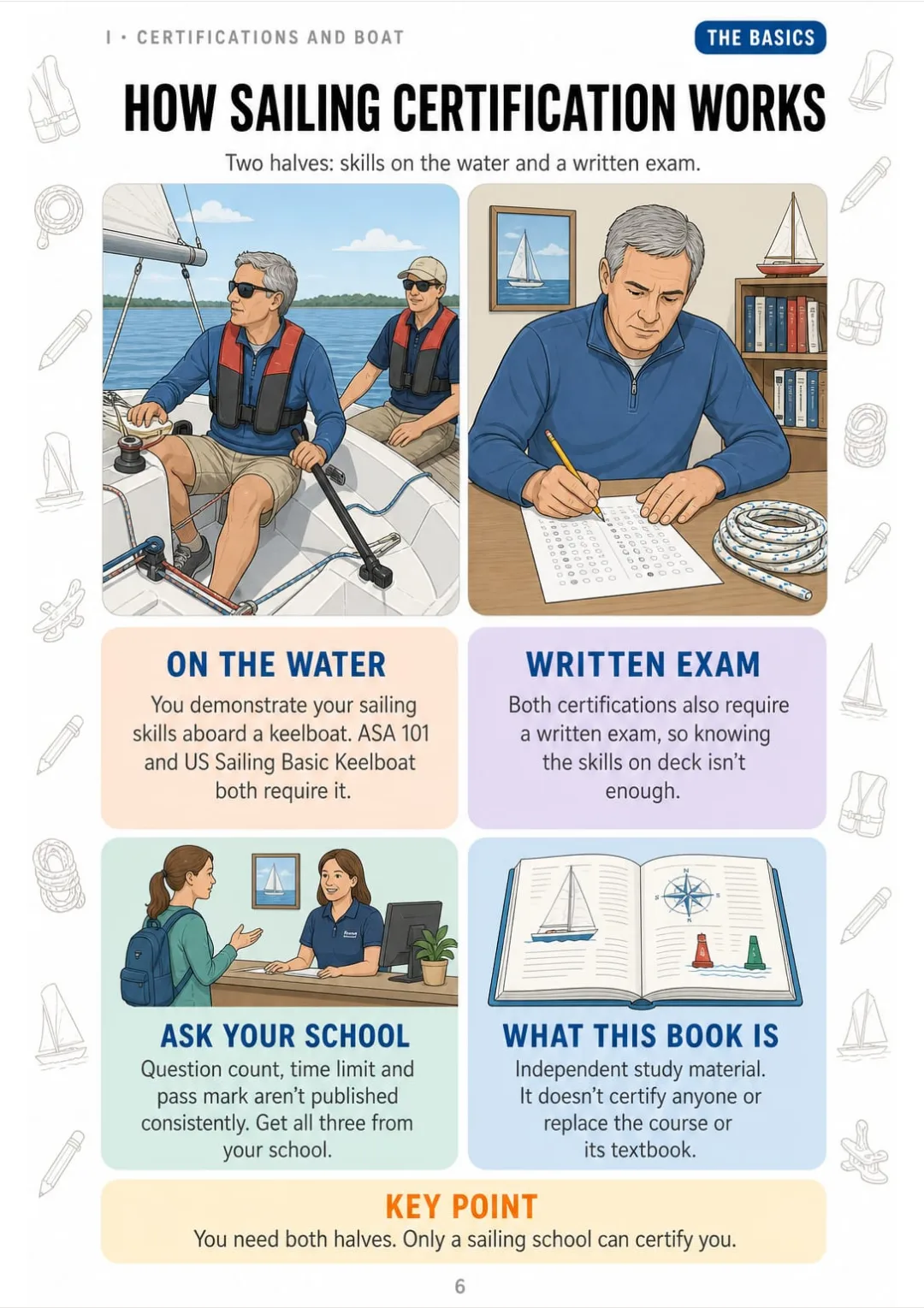
The two halves of ASA 101 and US Sailing Basic Keelboat: on-water skills plus a written exam.
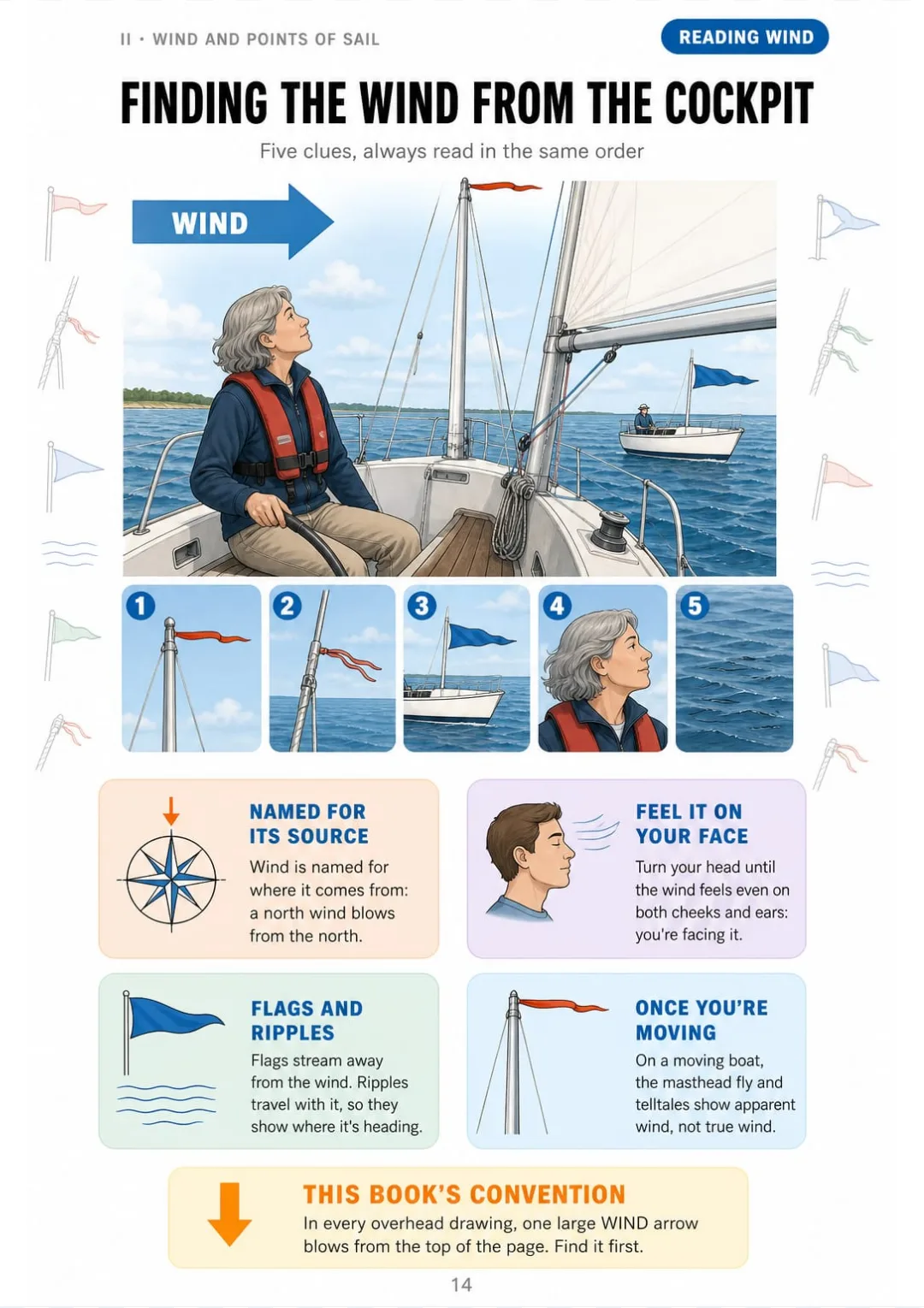
Fly, telltales, flags, your face, ripples: five clues in order, and a north wind blows from the north.
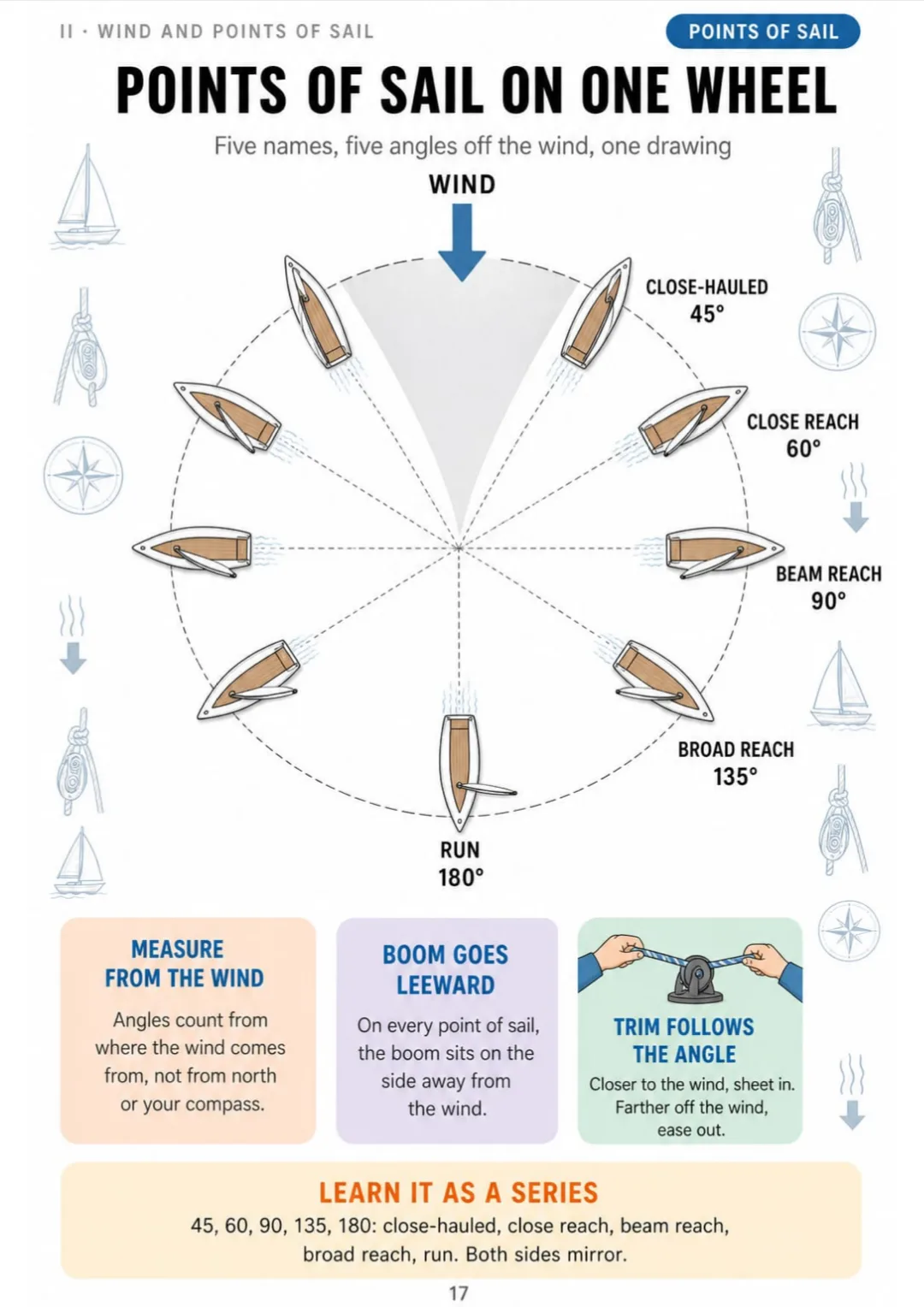
Close-hauled 45°, close reach 60°, beam reach 90°, broad reach 135°, run 180°, all on one wheel.
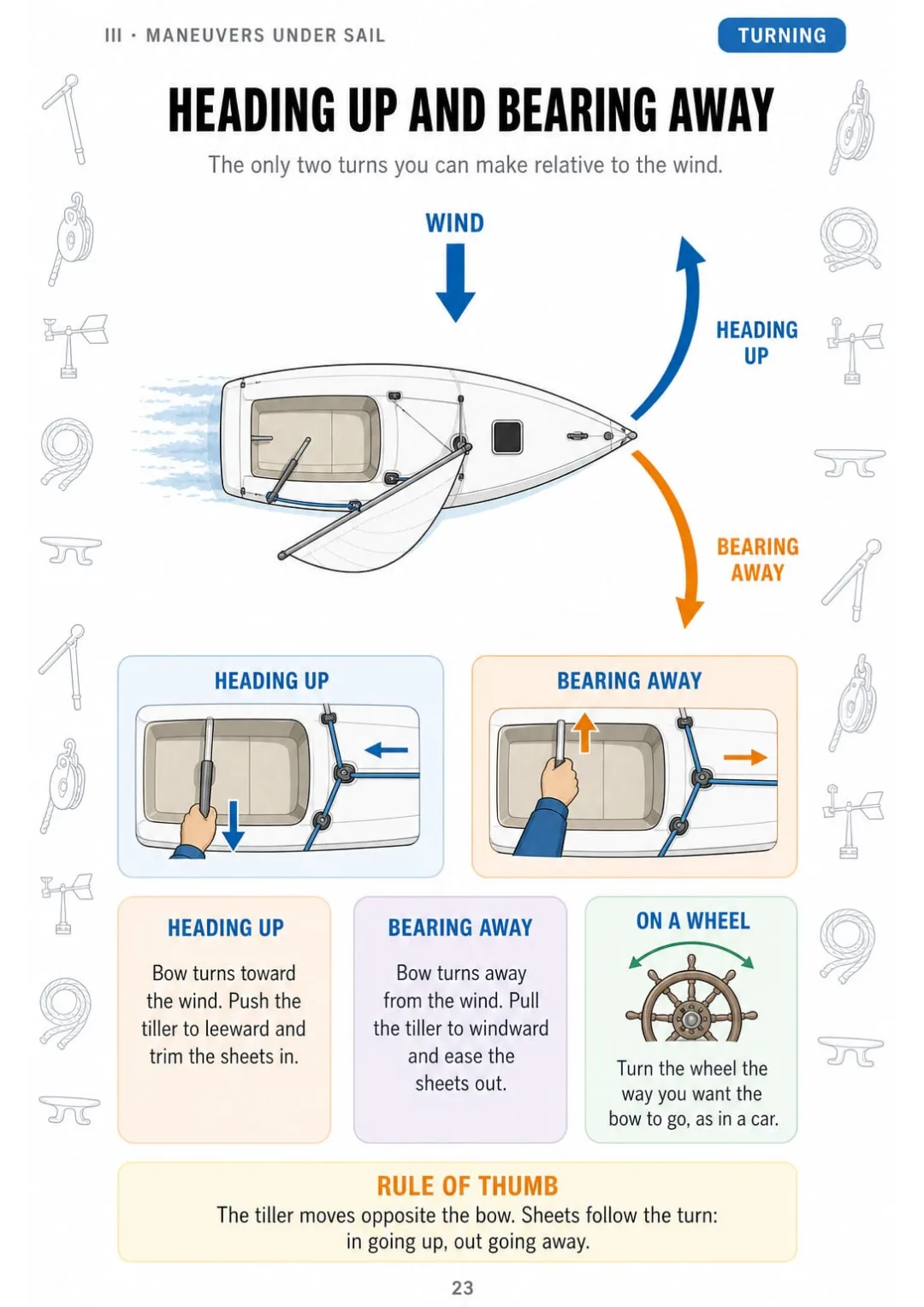
Tiller to leeward heads up, tiller to windward bears away, and the sheets follow the turn.
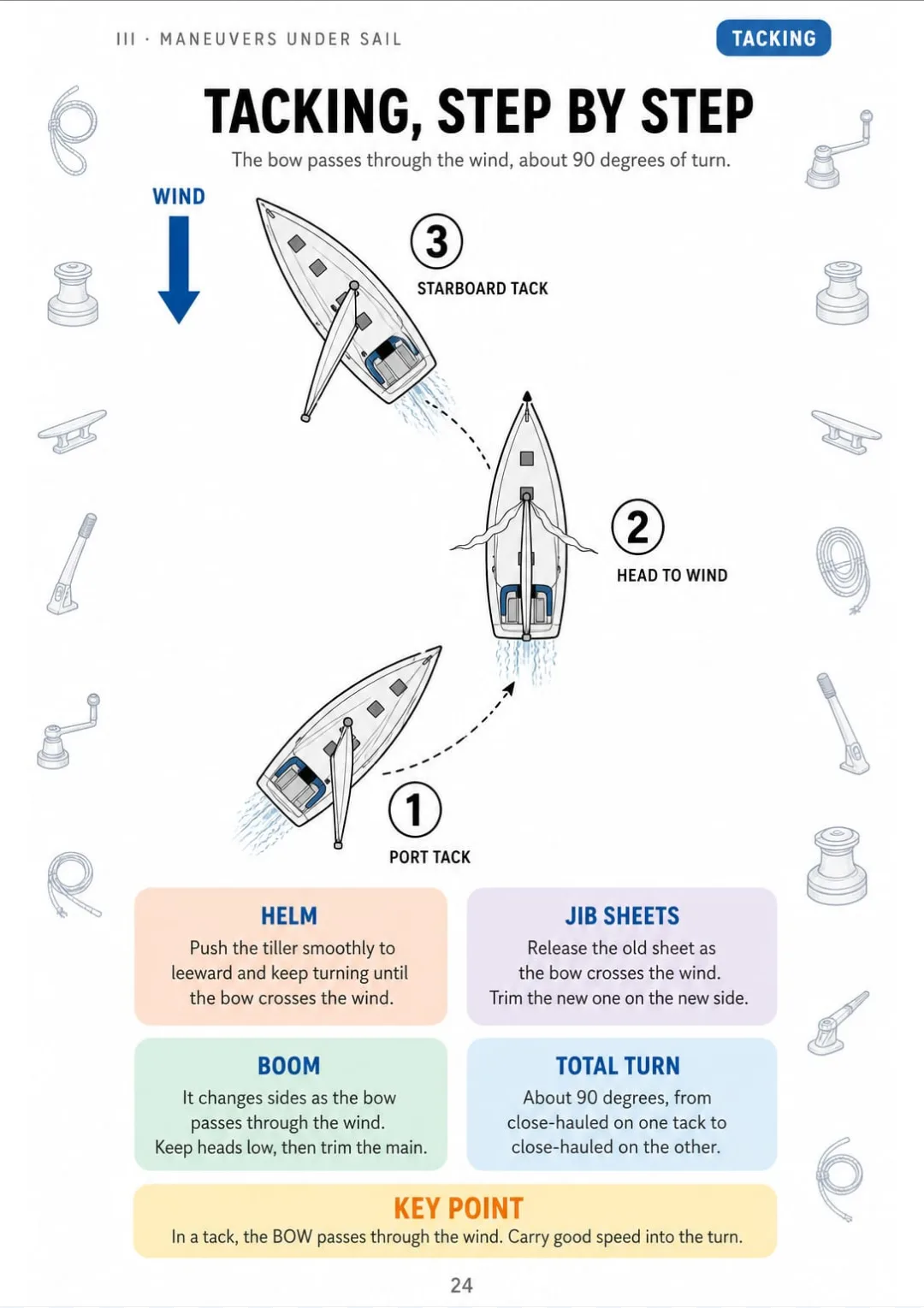
Close-hauled to close-hauled, bow through the wind, about 90 degrees of turn.
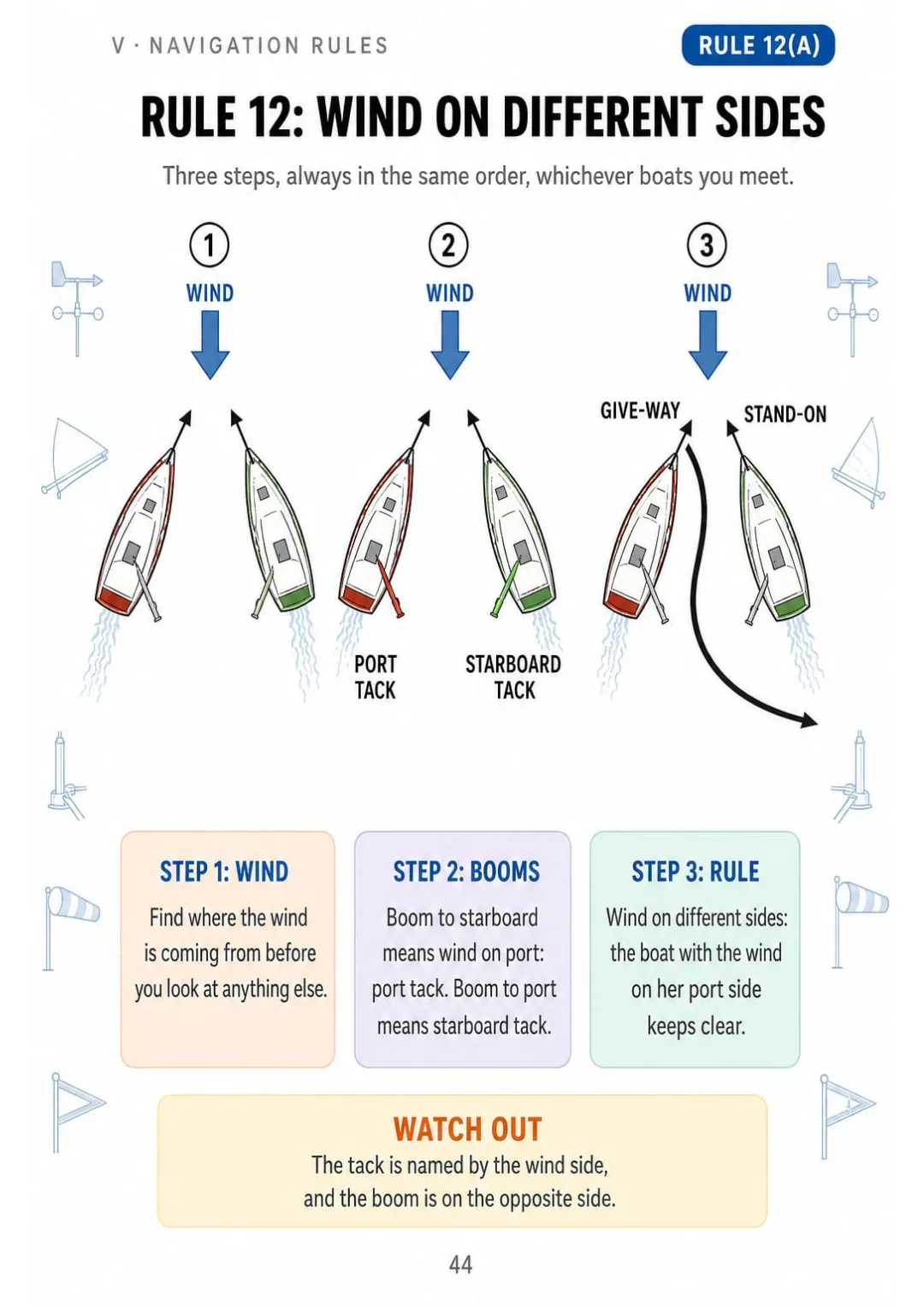
Rule 12(a): wind on different sides, the boat with the wind on her port side gives way.
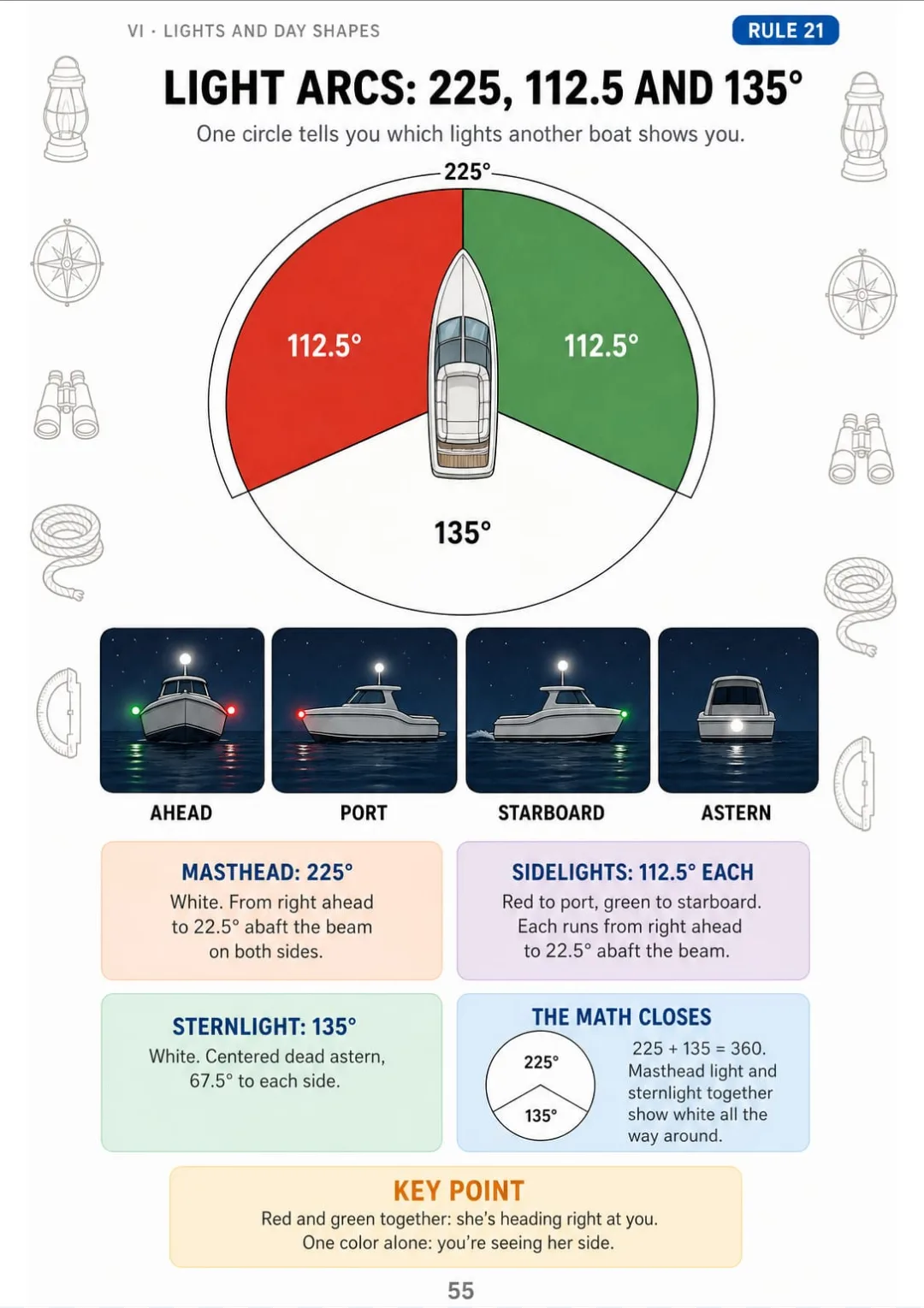
Rule 21 on one circle: masthead 225°, sidelights 112.5° each, sternlight 135°.
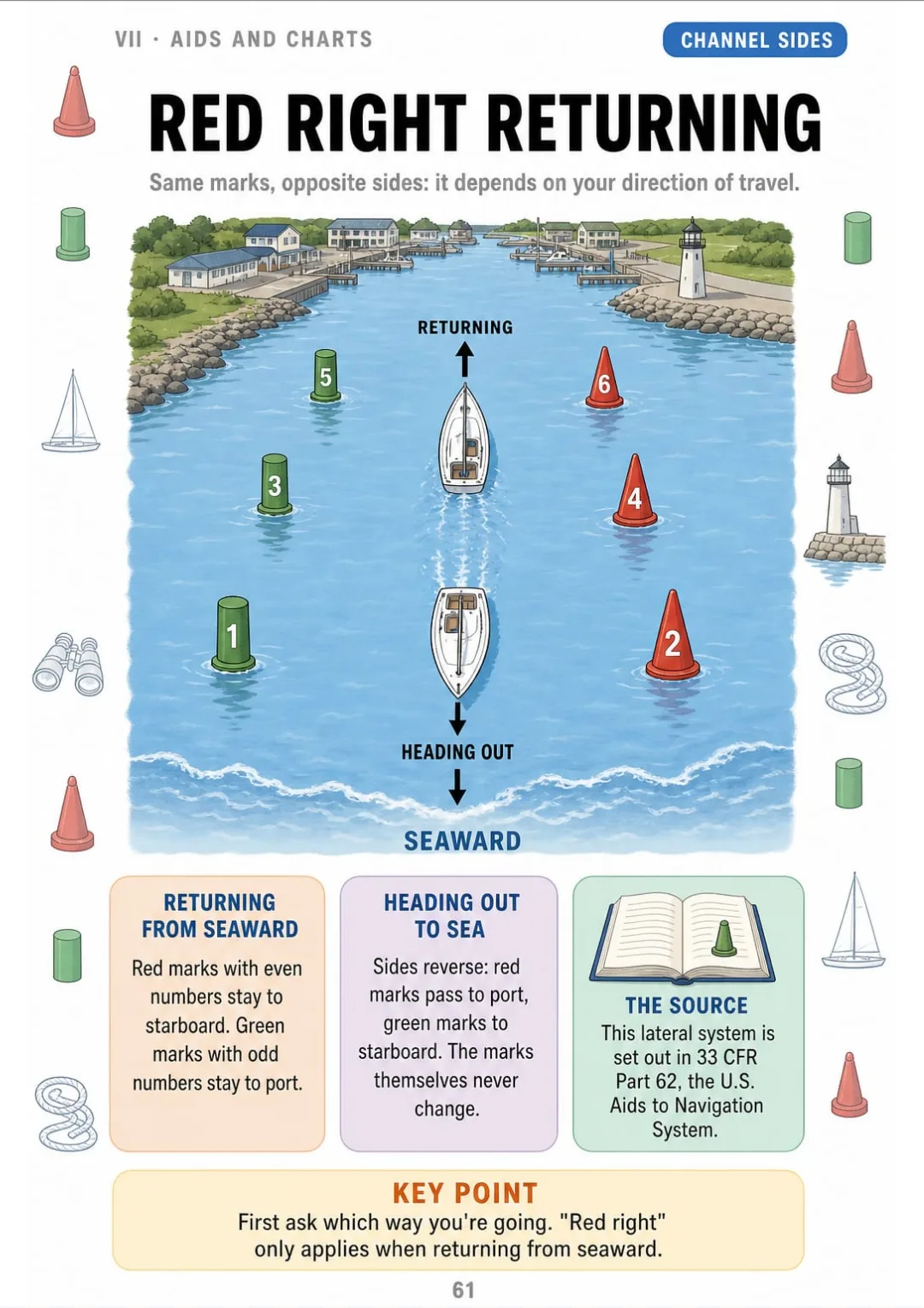
Returning from seaward: red, even numbers to starboard; green, odd numbers to port (33 CFR Part 62).

Swipe to see more →

These are real pages from the book. The table of contents is the full one: 10 parts and 82 topics.

The Wind Shifts, and the Picture in Your Head Flips.

You've read heading up and bearing away three times. You close your notes...

...and you can't remember which way the tiller goes for which turn. It was just lines of text.

Close-hauled 45°, close reach 60°, beam reach 90°, broad reach 135°, run 180°, all on one wheel.

Here, heading up and bearing away is one drawn page: tiller to leeward heads up, tiller to windward bears away, and the sheets follow the turn.

And on the pages next to it, each maneuver has its own: tacking, jibing, getting out of irons, heaving-to and reefing.

First you understand why it works that way. Then the order comes back on its own.

SEE THE DIFFERENCE

Stop memorizing rules you can't picture:

THIS
  • Page after page of tightly packed text
  • Rules you read but can't picture on the water
  • On the exam, you don't know where to start
Determination of wind direction aboard a sailing vessel requires the helmsperson to consult a number of visual and tactile indicators, including the masthead fly, the telltales, flags on nearby vessels or shore installations, the sensation of moving air upon the face, and the orientation of ripples on the water surface. It should further be noted that wind is conventionally designated by the direction from which it originates, such that a north wind is understood to blow from the north.
FOR THIS
  • Five wind clues drawn in order: fly, telltales, flags, face, ripples
  • One topic per page, with the rules in boxes
  • You remember it because you've seen it
Fly, telltales, flags, your face, ripples: five clues in order, and a north wind blows from the north.
CONTENTS

Take a Look at the 10 Parts and 82 Topics

The certifications and the boat, wind and points of sail, maneuvers, power, docking and anchoring, navigation rules, lights, aids to navigation and charts, marine weather, safety and the law, and final review: 87 pages, all illustrated

IThe Certifications and the Boat · pp. 6-13
  1. How Sailing Certification Works
  2. ASA 101, ASA 103, US Sailing: What Differs
  3. Hull and Deck: The Parts That Matter
  4. Standing Rigging: What Holds the Mast Up
  5. Running Rigging: Lines You Actually Pull
  6. Sails and the Names of Their Parts
  7. Port, Starboard, Windward and Leeward
  8. Below Decks: Seacocks, Bilge and Galley
IIWind and Points of Sail · pp. 14-22
  1. Finding the Wind From the Cockpit
  2. True Wind vs Apparent Wind
  3. The No-Go Zone
  4. The Points of Sail on One Wheel
  5. Port Tack vs Starboard Tack
  6. How a Sail Makes Lift
  7. Telltales and Sail Trim
  8. Heel, Weather Helm and Reefing Early
  9. The Lee Shore
IIIManeuvers Under Sail · pp. 23-32
  1. Heading Up and Bearing Away
  2. Tacking, Step by Step
  3. Jibing, Step by Step
  4. Helm Commands and Crew Responses
  5. Accidental Jibe and the Preventer
  6. Stuck In Irons and How to Get Out
  7. Heaving-To
  8. Reefing the Main and Furling the Jib
  9. Sail Plan by Wind Strength
  10. Person Overboard: Two Recoveries
IVUnder Power, Docking and Anchoring · pp. 33-40
  1. Engine Checks Before You Leave
  2. Prop Walk and Turning in Reverse
  3. Leaving the Dock
  4. Coming Alongside
  5. Spring Lines and Dock Lines
  6. Anchor Types and Picking an Anchorage
  7. Scope: How Much Rode to Let Out
  8. The Few Knots the Course Asks For
VNavigation Rules · pp. 41-54
  1. The Rules: International and Inland
  2. Lookout, Safe Speed and Risk of Collision
  3. Early and Substantial Action
  4. Rule 12: Wind on Different Sides
  5. Rule 12: Wind on the Same Side
  6. Rule 12: When You Can't Tell
  7. Sail vs Power: Rule 18
  8. Overtaking: Rule 13
  9. Head-On: Rule 14
  10. Crossing: Rule 15
  11. Stand-On and Give-Way: Rules 16 and 17
  12. Narrow Channels and Commercial Traffic
  13. Sound Signals and the Danger Signal
  14. Fog and Restricted Visibility: Rule 19
VILights and Day Shapes · pp. 55-60
  1. Light Arcs: 225, 112.5 and 135 Degrees
  2. Sailing Vessel Lights Under Rule 25
  3. Under Power at Night: Rule 23
  4. At Anchor: Rule 30
  5. Motorsailing: The Cone
  6. Alpha and Diver-Down Flags
VIIAids to Navigation and Charts · pp. 61-69
  1. Red Right Returning
  2. Nuns, Cans, Colors and Numbers
  3. Preferred Channel Marks
  4. Safe Water and Isolated Danger
  5. Information and Regulatory Marks
  6. Reading a Chart: Symbols and Soundings
  7. Latitude, Longitude and Measuring Distance
  8. True, Magnetic and Compass Headings
  9. Keeping the Compass Honest
VIIIMarine Weather · pp. 70-73
  1. Getting the Marine Forecast
  2. Cumulonimbus: Reading the Sky
  3. Small Craft Advisory vs Gale Warning
  4. Sea Breeze and Land Breeze
IXSafety and the Law · pp. 74-83
  1. Life Jackets and the Throwable
  2. Fire Extinguishers on Your Boat
  3. Visual Distress Signals
  4. Required Lights and Sound Devices
  5. Float Plan: What and Who
  6. Reporting a Boating Accident
  7. Alcohol: The Federal 0.08 Limit
  8. Hypothermia: Three Stages
  9. Fire and Fuel: Refueling Safely
  10. Aground, Flooding and Steering Failure
XFinal Review and Exam Day · pp. 84-87
  1. Look-Alike Rules, Side by Side
  2. The Most Frequent Mix-Ups
  3. Your Repeatable Methods on One Page
  4. Exam Day Checklist

What If Every Topic Fit on a Single Page?

Picture this:

Instead of rereading half a page on the points of sail without being able to see them...

...you open the page and find every point of sail on one circle, with the wind arrow drawn the same way every time.

Close-hauled to close-hauled, bow through the wind, about 90 degrees of turn.

And tacking, who gives way when two sailboats cross (Rule 12), light arcs, red right returning and the small craft advisory become drawings and tables you can read at a glance.

You stop memorizing and start understanding.

That's what Sailing Made Visual does: 87 illustrated pages, 10 parts and 82 topics, and at the end a final review with the look-alike rules side by side and an exam day checklist.

Because what your brain sees organized, it remembers.

Here Is What You Get with Sailing Made Visual:

Ipp. 6-13

The Certifications and the Boat

Know what each course asks of you and name every part of the boat: how certification works, what differs between ASA 101, ASA 103 and US Sailing, the hull, rigging and sails, and port, starboard, windward and leeward.

IIpp. 14-22

Wind and Points of Sail

Know where the wind is when someone asks: finding the wind, true vs apparent wind, the no-go zone, the points of sail on one wheel, port and starboard tack, telltales and the lee shore.

IIIpp. 23-32

Maneuvers Under Sail

Know which way the tiller goes for each maneuver: heading up and bearing away, tacking and jibing step by step, helm commands, getting out of irons, heaving-to, reefing and person overboard.

IVpp. 33-40

Under Power, Docking and Anchoring

Run the same checks in the same order before you leave: engine checks, prop walk, leaving the dock, coming alongside, dock lines, anchors, scope and the few knots the course asks for.

Vpp. 41-54

Navigation Rules

Tell who gives way when two boats meet: International and Inland Rules, lookout and safe speed, Rule 12 in its three cases, sail vs power, overtaking, head-on, crossing, stand-on and give-way, sound signals and fog.

VIpp. 55-60

Lights and Day Shapes

Read what a boat is doing from its lights and signals: light arcs, sailing vessel lights, lights under power and at anchor, the motorsailing cone, and the Alpha and diver-down flags.

VIIpp. 61-69

Aids to Navigation and Charts

Recognize each buoy and read the chart: red right returning, nuns and cans, preferred channel, safe water and isolated danger marks, chart symbols and soundings, latitude and longitude, and true, magnetic and compass headings.

VIIIpp. 70-73

Marine Weather

Understand the forecast before you leave: getting the marine forecast, reading cumulonimbus, small craft advisory vs gale warning, and sea and land breezes.

IXpp. 74-83

Safety and the Law

Keep gear, legal basics and emergencies in one place: life jackets, fire extinguishers, distress signals, float plans, accident reports, the federal 0.08 BAC limit, hypothermia, refueling, and what to do if you run aground, take on water or lose steering.

Xpp. 84-87

Final Review and Exam Day

Separate the rules you tend to mix up before the exam: look-alike rules side by side, the most frequent mix-ups, your repeatable methods on one page and the exam day checklist.

At the end of the book: A final review with look-alike rules side by side, the most frequent mix-ups and an exam day checklist.
And That Is Not All: 2 More Books, Free

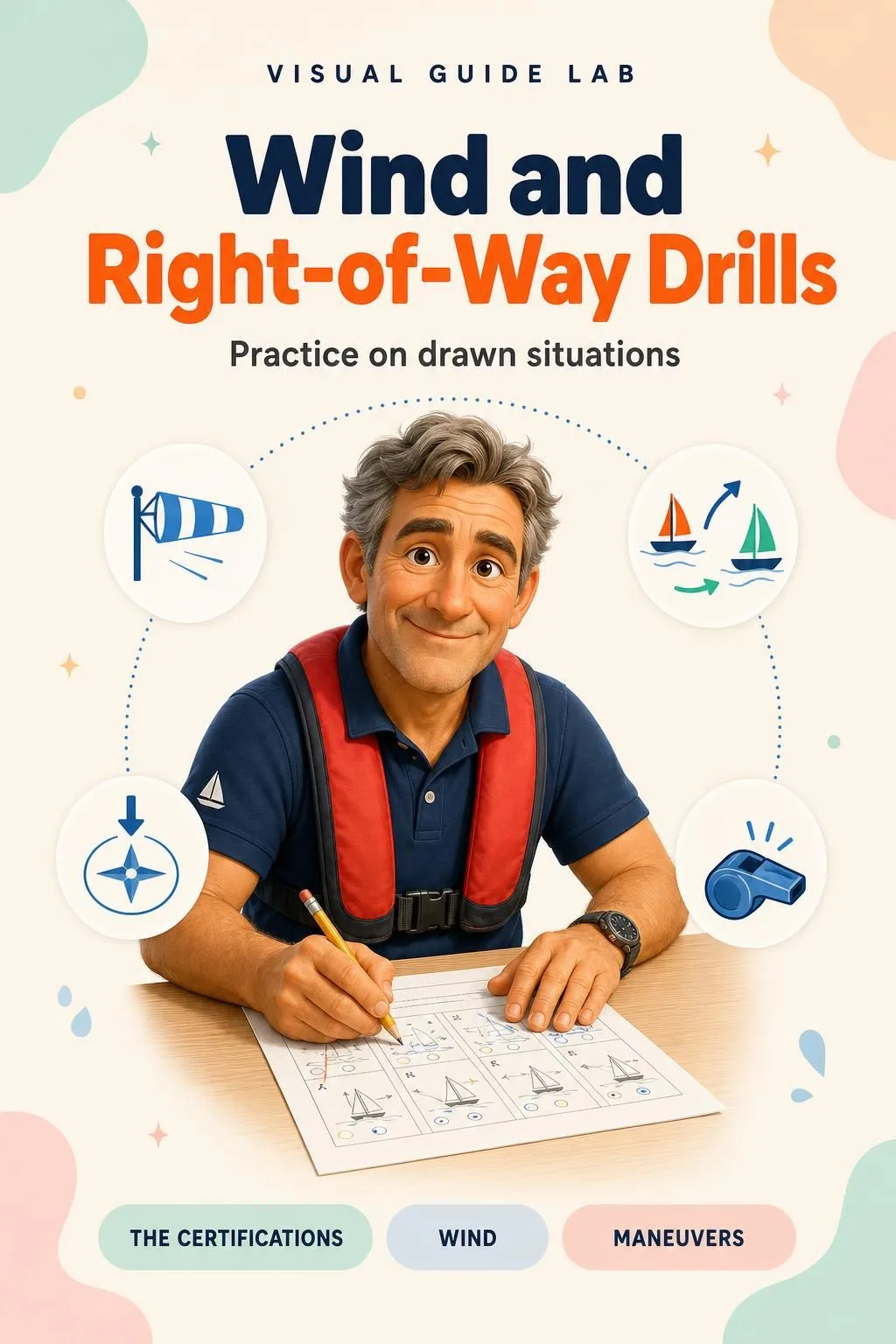
Wind and Right-of-Way Drills

BONUS 1: «Wind and Right-of-Way Drills»

Value on its own: US$ 17.90

Drawn situations: which tack, which point of sail, who gives way, with every answer worked out with the same steps as the book.

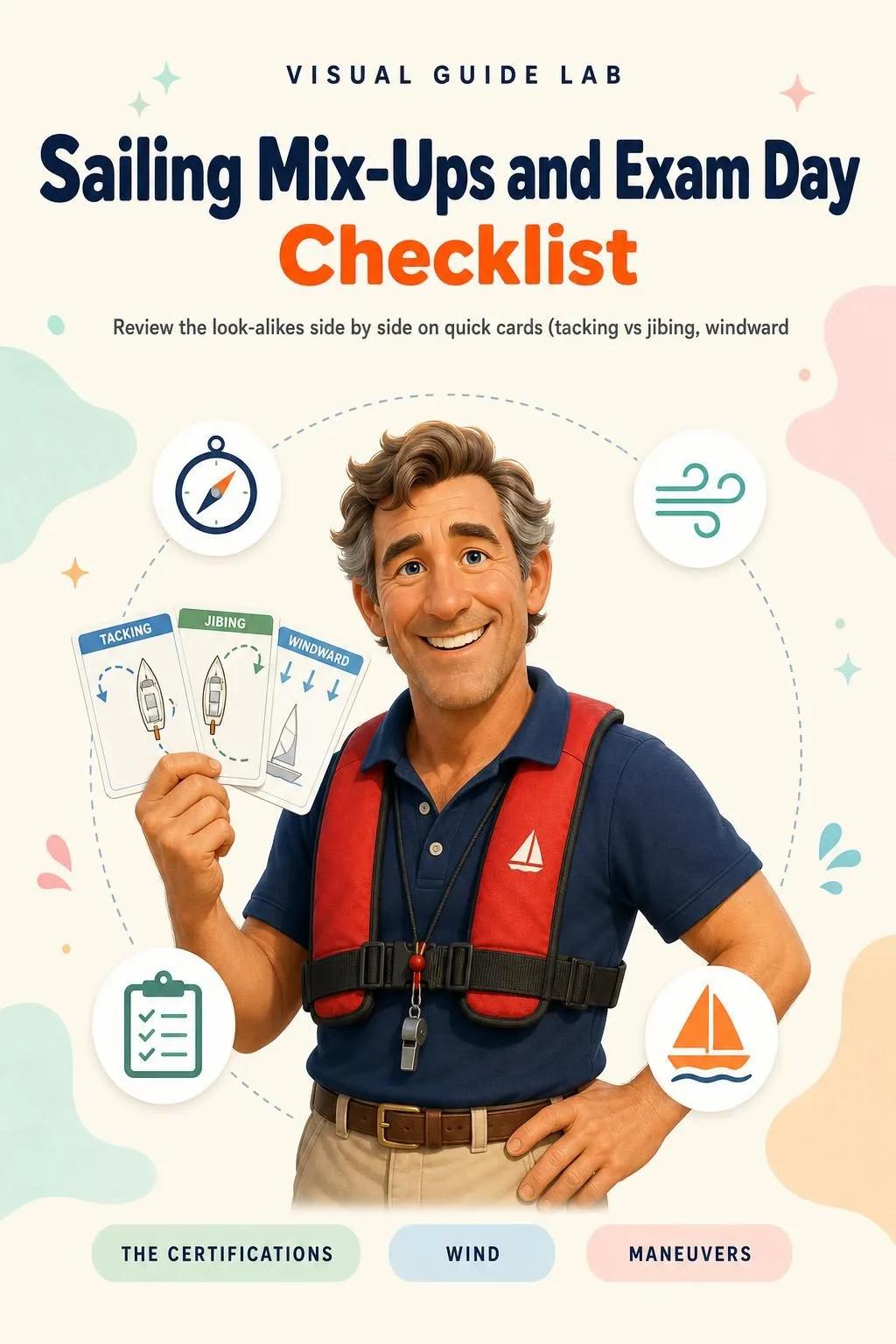
Sailing Mix-Ups and Exam Day Checklist

BONUS 2: «Sailing Mix-Ups and Exam Day Checklist»

Value on its own: US$ 14.90

Quick-review cards with the look-alikes side by side (tacking vs jibing, nun vs can, Inland vs International signals) and what to review the night before.

Sailing Made Visual + 2 Free Books

  • Sailing Made Visual: 87 illustrated pagesUS$ 63
  • BONUS 1: Wind and Right-of-Way DrillsUS$ 17.90
  • BONUS 2: Sailing Mix-Ups and Exam Day ChecklistUS$ 14.90
  • High-resolution PDF to printIncluded
Total value US$ 95.80
YOUR PRICE:
US$ 27
You save US$ 68.80
YES, I WANT SAILING MADE VISUAL FOR US$ 27

📄 This is a digital PDF book sent to your email: nothing is printed or shipped.

Secure purchaseEncrypted payment30-day guarantee

PDF by email: Sailing Made Visual reaches your inbox as a PDF, and the two free books come by email too. One-time payment, no installments or hidden costs.

Is This Book for You?

You're taking your keelboat course

You're taking your keelboat course

Wind, tack, maneuvers and rules, one topic per page, to review between days on the boat.

Your written exam is coming up

Your written exam is coming up

A review of the whole written portion, and at the end the look-alike rules side by side, the most common mix-ups and an exam-day checklist.

You're planning a charter or buying your first boat

You're planning a charter or buying your first boat

A visual reference to keep on hand: right of way, lights, buoys, anchoring and safety gear, so everyone aboard is looking at the same picture. It doesn't qualify you to charter: charter companies set their own requirements.

To Sum Up: Here Is What You Get

US$ 95.80US$ 27
YES, I WANT SAILING MADE VISUAL FOR US$ 27

📄 This is a digital PDF book sent to your email: nothing is printed or shipped.

30DAYS
GUARANTEE

30-Day Guarantee

30-day guarantee: tell us what didn't work and we'll refund 100%.

You have 30 days to try Sailing Made Visual and both free books. If it doesn't work for you, tell us what didn't work and we'll refund 100% of what you paid. One-time payment, no subscriptions and no surprises.

Frequently Asked Questions

How do I get the material?

Sailing Made Visual comes as a high-resolution PDF by email, sent to the address you enter at checkout, to read on your phone or print. The two free books, Wind and Right-of-Way Drills and Sailing Mix-Ups and Exam Day Checklist, also come as PDFs by email.

Is it a monthly or one-time payment?

One-time payment of $27 for the book and the two free books. No installments and no subscription. Any extras offered at checkout or after payment are optional: you only pay for them if you add them.

Who is it for?

For adults taking or about to take ASA 101, ASA 103 or US Sailing Basic Keelboat who want a visual review of the written portion, and for anyone preparing for a first sailboat or a future charter. It covers U.S. rules, starts with the parts of the boat, and knots take up just one page, so you don't need to have sailed before. It isn't a charter qualification: charter companies set their own requirements. Check the index above to see the topics.

What sources is it based on?

The USCG Navigation Rules and Regulations Handbook; 33 CFR Parts 62, 80, 83, 95, 173 and 175; 46 CFR 25.30; and National Weather Service marine definitions.

Is this official material?

No. It's an independent study book, not affiliated with or endorsed by ASA, US Sailing or the U.S. Coast Guard. It doesn't use their text, drawings or questions.

Does it replace my course or its textbook?

No. It doesn't certify you or replace your course, its textbook or on-water instruction. For exam details like time, number of questions or passing score, ask your school.

Are the practice questions the ones on the exam?

No. The drills are written for this book and aren't official questions from any exam. They're there for practice.

Can I print it?

Yes. It's a PDF, so you can read it on your phone or print it to keep on hand.

What if I don't like it?

30-day guarantee: tell us what didn't work and we'll refund 100%.

One Last Thing Before You Decide...

You don't have to reread the same page hoping this time it sticks.

You don't have to memorize rules you can't picture.

And you definitely don't have to walk into the written exam not knowing where to start.

One last thing before you decide. You already have the course and the notes. What's missing is the picture: 87 illustrated pages, one topic each, plus 2 free books.

One-time payment: US$ 27 · Guarantee: 30 days · PDF by email

YES, I WANT SAILING MADE VISUAL FOR US$ 27

📄 This is a digital PDF book sent to your email: nothing is printed or shipped.